Organisational History
Get To Know Lagos Water
Lagos is a state surrounded by water. Because of this many people assumed that it would be easy to provide the people with required water. But far from it. The waters in the lagoon and ocean surrounding Lagos are not fit for human consumption. The large expanse of water around Lagos is not potable and does not meet World Health Organisation standards.
Hence, the public authorities in Lagos had to search far and wide to get water for the people of Lagos to drink and use. The search began at the beginning of the last century in 1901 by the colonialists who searched as far as to Iju, a suburb on the outskirts of Lagos , where water was flowing in from River Ogun.
It was from Iju that the colonialists started water supply to Lagos areas, mainly Ikoyi and Obalende. The first waterworks was built in 1910 and has since evolved through several stages.
Lagos had a head start in many things, like modern water supply system while other communities were still tapping water from springs, rivers, hand-dug wells, rain water, etc.
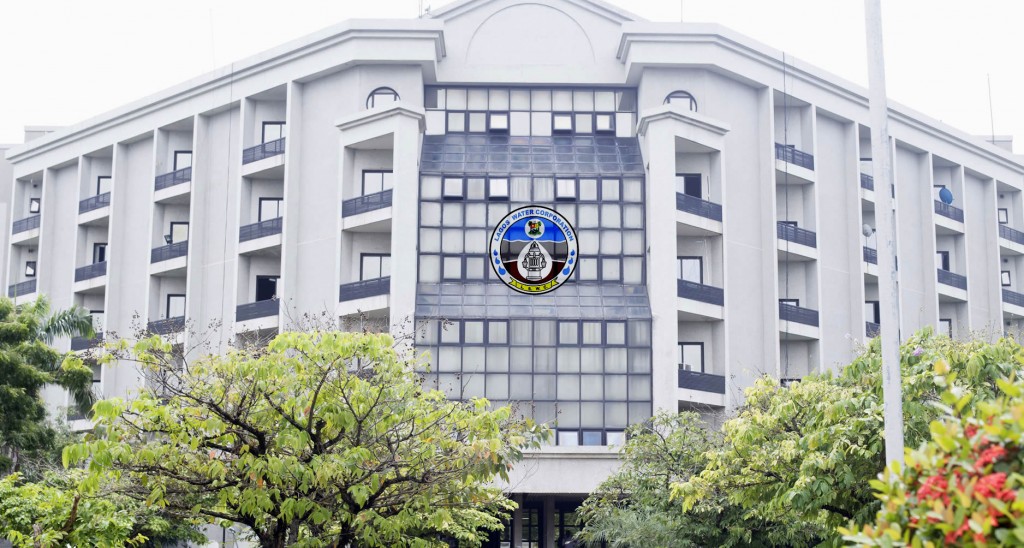
The first treatment plant, with a capacity of 11,000m3/d (2.42 mgd), was installed in 1910 at Iju village, a part of Ogun State, abstracting raw water from spring water trenches within the Iju hills. The scheme was then designed and executed to serve the residential reservation of the colonial administrators living in Ikoyi in Lagos State when the first cast iron trunk main “A” of nominal diameter 28″ (700 mm) was laid.
Subsequent expansion was made to the plant in 1943 by increasing its capacity to 27,000m3/d (6 mgd), accompanied by the laying of another cast iron trunk main “B” of nominal diameter 24″ (600mm). The plant drew its raw water resource from Iju River .
The plant capacity was again increased in 1954 to 50,000m3/d (11mgd). Additional abstraction investments were developed at Akute, contiguous to the River Ogun, which is the most bountiful source of surface raw water available to the Lagos metropolis. With the increasing demand of the residents and the growth of the industrial sector, the production and distribution potential became overstretched.
A third steel trunk main “C” of diameter 42″ (1050mm) was subsequently laid in 1962.
Iju Waterworks went through another upgrading in 1965 to 109,000m3/d (24mgd) through a “crash programme”. The capacity of the three primary trunk mains “A”, “B” and “C” now cater for the transmission of about 159,000m3/d (35mgd) since 1973.
The first treatment plant, with a capacity of 11,000m3/d (2.42 mgd), was installed in 1910 at Iju village, a part of Ogun State, abstracting raw water from spring water trenches within the Iju hills. The scheme was then designed and executed to serve the residential reservation of the colonial administrators living in Ikoyi in Lagos State when the first cast iron trunk main “A” of nominal diameter 28″ (700 mm) was laid.
In view of the fact that rapid population growth in Lagos has posed a heavy burden on the public water system, there has been a continuous demand and need for expansion of the Lagos water supply and distribution capacities.
Since 1910 to date, the main concern of the authorities managing water supply to Lagos has always been how to increase the supply of water due to the ever increasing population of Lagos , as a commercial nerve centre of the nation’s economy. The population of Lagos is growing rapidly daily, with more people settling down than moving out. At present, Lagos has a population of about 15 million.
Over the years, therefore, the supply from Iju was no longer enough to meet the demands of Lagosians and a second waterworks had to be constructed at Ishasi, deriving its source from River Owo.
It has a capacity of 18,000m3/d (4 mgd). This waterworks was developed primarily to meet the water requirements of the residents of Festival Village during the All Black and African Festival of Arts and Culture, FESTAC ’77.
In view of the fact that rapid population growth in Lagos has posed a heavy burden on the public water system, there has been a continuous demand and need for expansion of the Lagos water supply and distribution capacities. Although the Iju Waterworks was expanded in 1973 to 35mgd, it had to be upgraded again in order to further reduce the shortfall between the water demand and water supply.
This was done between 1982 and 1985 to achieve 45 mgd production target. It was at this stage that an overhead 5,000 cubic metre reservoir was also constructed at Ishaga.
The supply of water to Lagos, as can be seen from this highlight, from the beginning, had been a Federal responsibility under the Federal Ministry of Works, but this great responsibility was transferred to Lagos State in 1967 when the state was created. So, for 66 years, Federal authorities took care of the establishment of waterworks and distribution channels for Lagos .
Lagos State took over in 1967 to date to carry the enormous responsibility. The state set up a Water Board to carry out the various duties in this respect and in 1980 created the present Water Corporation backed up with an enabling edict in 1985. There were many positive developments between 1979 and 1983 in Lagos State water supply under the then civilian administration in the state, which initiated the construction of 10 mini-waterworks in 1980 located throughout the state.
Mini-waterworks is waterworks that can provide water supply up to 3 million gallons daily.
Seven of the mini-waterworks in metropolitan Lagos have a combined design output of 82,000m3/d (18 mgd) while the remaining three in the semi-urban areas have a combined capacity of 38,000m 3/d (8.4 mgd).
The mini-waterworks were designed to feed directly into the networks laid in their various locations to give immediate effect in these areas. Along with the installations of the mini-waterworks, additional tertiary distribution networks have been laid on a continuing basis, to improve access to consumers.
In 1979, the Lagos State Government received the report of “The study of the projected water demand of Lagos up to the year 2000”. It became imperative that the State Government had to consider water supply expansion schemes.
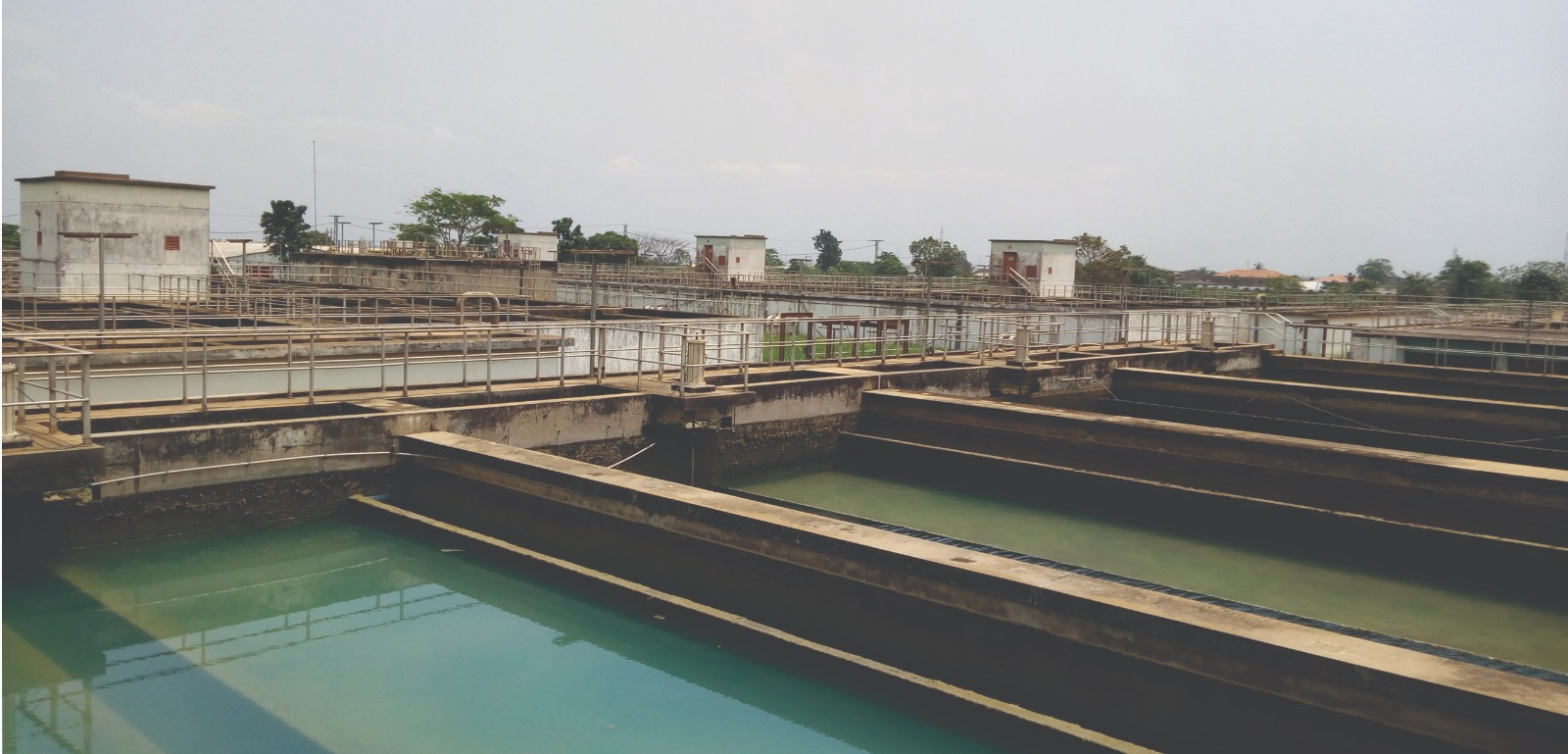
These included:
- The first treatment plant, with a capacity of 11,000m³/d (2.4 mgd), was installed in 1910 at Iju village, a part of Ogun State, abstracting raw water from spring water trenches within the Iju hills.
- Expansion of Iju Waterworks from 109,714m³/d (24.1 mgd) to 208,000m³/d (46 mgd).
- Construction of Adiyan Waterworks in three phases to supply 70 mgd per phase.
- Expansion of Ishasi Waterworks from 18,000m³/d (4 mgd) to 160,000m³/d (35.1 mgd), including expansion of primary, secondary, and tertiary distribution networks, with the first cast iron trunk main “A” of 28″ (700 mm) laid to serve Ikoyi in Lagos State.